Axe Kicks And Fearless Pressure: Inside Asadula Imangazaliev’s Unorthodox Striking Style
The flyweight Muay Thai king breaks down the unique training journey that shaped his spectacular techniques.
By Fachrul Sidiq
Nov 17, 2026, 12:18 UTC
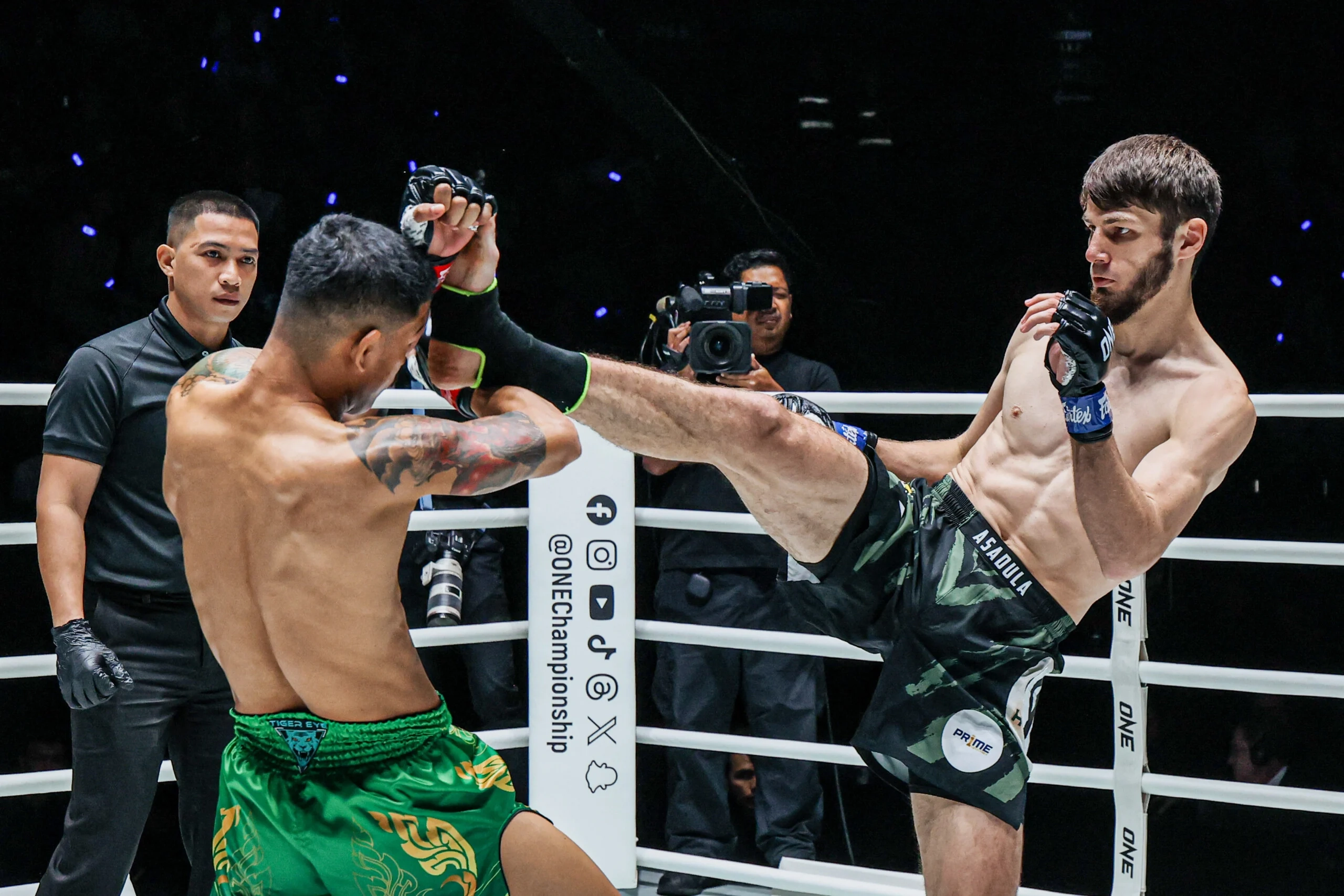
An axe kick crashing down from above. A spinning backfist whipped from a blind angle. A blistering combination that leaves an opponent frantically guessing where the next strike will land.
Reigning ONE Flyweight Muay Thai World Champion Asadula “The Dagestan Ninja” Imangazaliev has built his fearsome reputation on a highly unorthodox attacking style that makes him one of the most wildly unpredictable strikers in combat sports.
The 23-year-old Russian sensation boasts a flawless 13-0 professional record, including nine victories and seven knockouts under the ONE Championship banner. His staggering 78 percent finishing rate underscores the lethal effectiveness of a sprawling striking arsenal that has carried him to World Championship glory.
Now, Imangazaliev is actively preparing to defend his undisputed crown against #1-ranked Aslamjon “El Pantera” Ortikov at The Inner Circle 39 on Friday, November 20. The blockbuster main event streams live in Asia primetime from Bangkok’s historic Lumpinee Stadium, exclusively for members at live.onefc.com.
But behind Imangazaliev’s extraordinary striking mastery lies a fascinating journey deeply shaped by his childhood in Dagestan, his cross-training across various martial arts, and the profound influence of a fellow Russian martial arts star who would eventually become one of his closest friends.
Why Imangazaliev Chose Striking Over Wrestling

Dagestan has famously produced some of combat sports’ greatest wrestlers, and Imangazaliev naturally grew up with a personal connection to the dominant discipline. His father actively practiced amateur wrestling, making it an obvious starting point for the future World Champion.
Yet the young athlete never developed the same fiery enthusiasm for grappling. Instead, he found his true calling in Muay Thai, where he could freely explore a completely different dimension of martial arts.
Imangazaliev told onefc.com:
“When I went to wrestling, I didn’t like it. I don’t know, maybe because I didn’t like the coach. Maybe that’s why. But I didn’t like it when I was young.
“And after that, I went to Muay Thai and met Kiamran Nabati. This gave me motivation for training.”
His insatiable curiosity eventually pushed him beyond traditional Muay Thai, drawing him particularly toward taekwondo. There, he meticulously learned the axe kicks and spinning techniques that have since become his devastating trademarks.
Imangazaliev credits his taekwondo coach in Dagestan, Magomed Tagir Magomedov, whom he still trains with whenever he returns home. But no single martial art or instructor can take complete credit for his distinctly hybrid arsenal.
He said:
“You know, when I was young, I watched so many fights. I liked watching fights, you know. When I came home after training, I watched fights.
“And I trained in taekwondo. I liked every sport. I practiced taekwondo, wrestling, jiu-jitsu, football, everything. And when I watched fights, I looked at my favorite fighters. I took something from this fighter, something from that fighter, and something from another fighter, and made my own style, you know.”
How Kiamran Nabati Inspired His Fearless Mentality
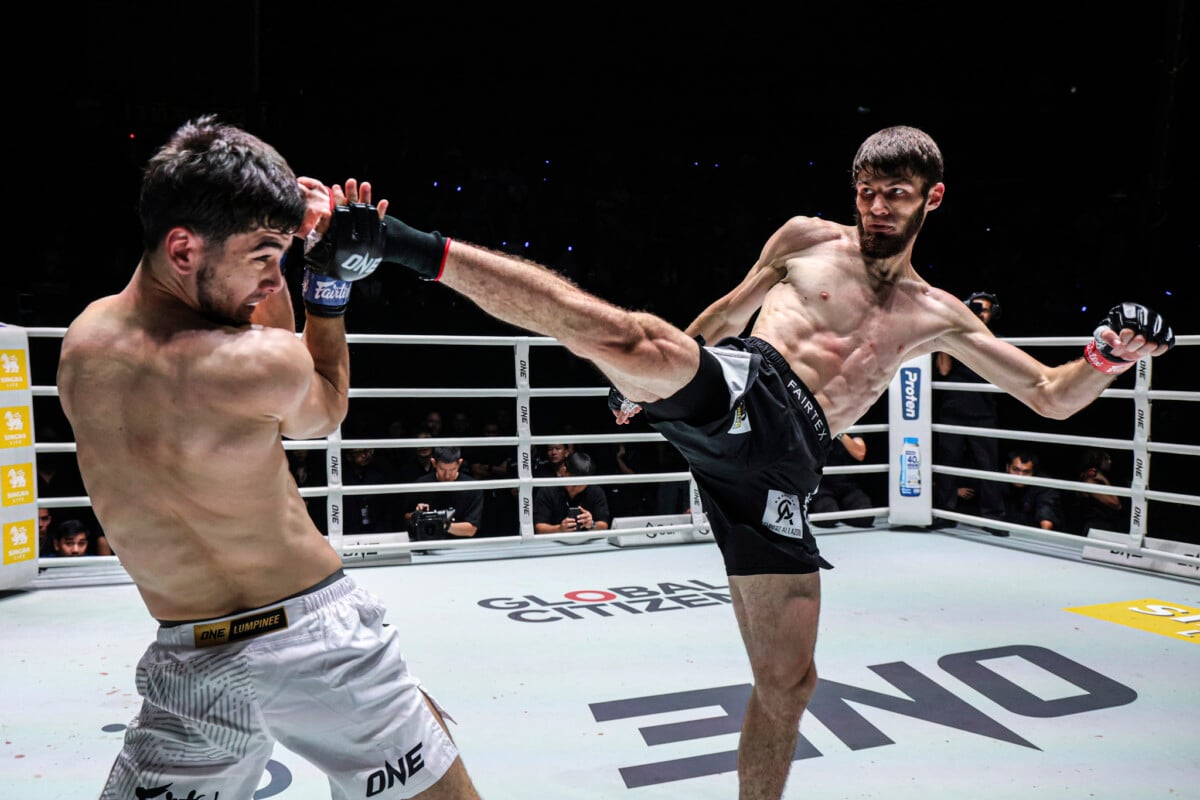
Among the plethora of athletes Imangazaliev studied, none left a more profound personal impression than Kiamran Nabati, the bantamweight Muay Thai superstar whose relentless aggression and competitive spirit became the ultimate blueprint for the aspiring fighter.
Their very first encounter remains vividly etched in Imangazaliev’s memory. He was still a youngster grinding in Dagestan when an unfamiliar fighter sporting a distinctive afro hairstyle walked into the gym long after most of the other athletes had gone home. Only afterward did his coach explain exactly who the visitor was.
The flyweight king recalled:
“When I was young, maybe 12 years old, I met him. And I always watched when he went to professional fights and amateur fights. I watched. And I really liked his mentality. You know, when he goes, he just goes forward and does what he wants. He’s not scared of anything. He just goes.
“I liked this, and I wanted to be the same. He always goes forward. Pressure, pressure.”
As Imangazaliev relentlessly pursued his own ambitions, that early adolescent admiration organically developed into a close brotherhood. He eventually transitioned his training from Buynaksk to Makhachkala, where he earned opportunities to work directly alongside Nabati, who effectively became an older brother to him.
But one specific childhood memory stands out above the rest. Nabati was already a massively popular figure among the younger athletes, and a small, thoughtful gesture after one of his trips abroad left a lasting impression on the future flyweight king.
“The Dagestan Ninja” shared:
“When I was young, he was already famous when I met him. And when he came to the gym, all the kids came and were very happy, you know.
“And one time, he went to Thailand and came back. He brought me one Muay Thai T-shirt from Thailand. He gave it to me, and everyone came and said, ‘Please give it to me, please give it to me.’ But I didn’t give it to anybody. I always remember that moment.”
The Method Behind His Unpredictable Attacks
Imangazaliev’s fighting identity is not simply a chaotic combination of taekwondo kicks and Nabati’s forward pressure. His ongoing tactical development also reflects the steady influence of Abdulnasyr Medzhidov, the esteemed coach he shared with Nabati in Makhachkala.
While the young Dagestani continually expanded his technical arsenal, Medzhidov helped forge the ironclad mentality and icy composure required to execute those high-risk weapons against elite global opposition.
The Venum Training Camp and Team Chingiz Allazov representative said:
“Also, my coach from Makhachkala, Abdulnasyr Medzhidov. He taught me, you know, mentality, everything. He helped build my character, everything, so that when I go into a fight, I can just do my work.”

His spectacular, spinning arsenal could easily belong to a character in a fighting video game. Fittingly, Imangazaliev also cited the mobile game Shadow Fight as an amusing early parallel to the axe kicks and spinning attacks that have become his signature moves.
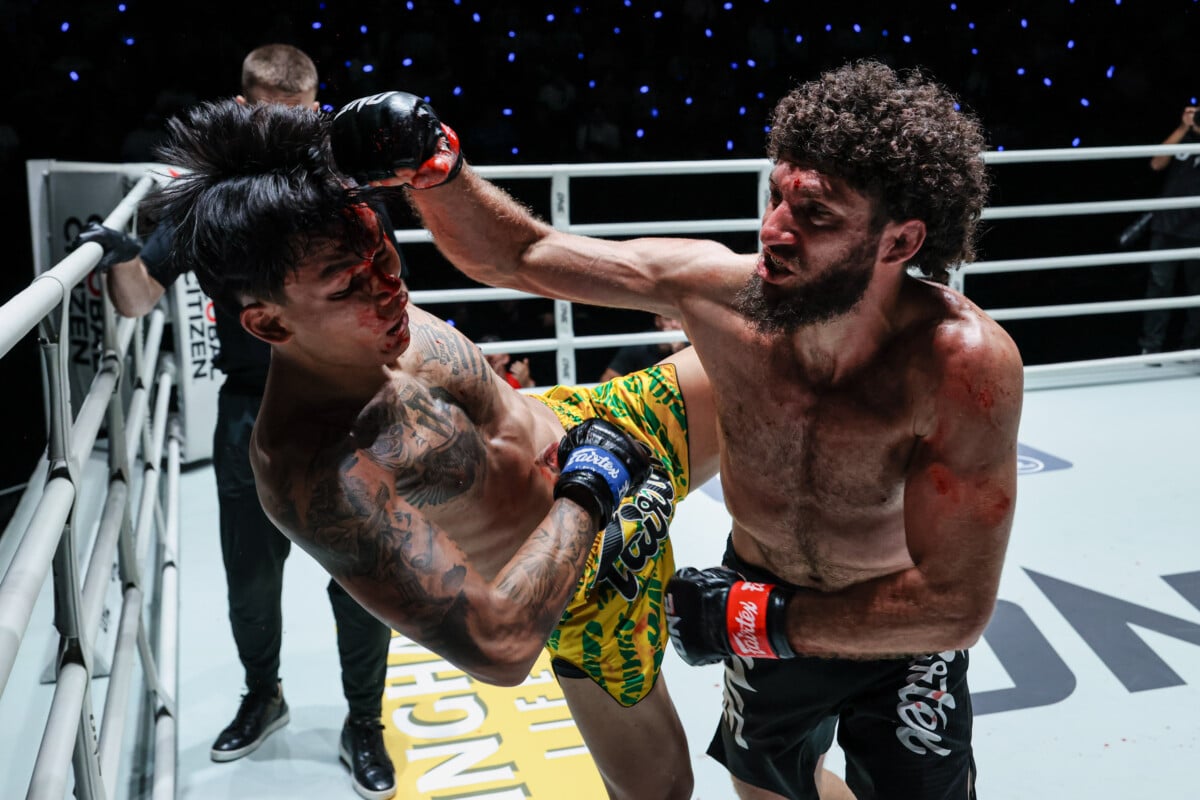
Inside the ring, the reigning flyweight king brilliantly uses his highly unusual attacks to instantly disrupt an opponent’s sense of distance and force openings. And when those erratic movements inevitably expose a window for a finish, he is always ready to capitalize.
He said:
“When I do this, I do it when my opponent feels comfortable with the distance and everything. I do this to shock him a little bit and after that, I can keep working.
“But if I feel I can finish him in that moment, of course I go. I give him an axe kick, I catch him, and after that I give a high kick with a backfist.”
Related Athletes
Learn more about the athletes featured in this article.
